Blocked DPF Symptoms: 7 Signs That Your Filter Is Clogged
If your diesel is losing power, burning more fuel, or smelling of soot — your DPF could be the problem. Here is how to spot the signs early, before elevated back-pressure causes turbo or injector damage.
Reviewed and signed off by Stoke Tuning— Remapping & Diagnostics Specialist, Stoke Tuning & AdBlue Repair | Published: 3 September 2026 | Updated: 3 September 2026
Contents
Quick Answer: What Are the Symptoms of a Blocked DPF?
The main blocked DPF symptoms are: a DPF or engine management warning light, reduced power or limp mode, increased fuel consumption, rough idle, dark exhaust smoke or strong diesel smell, the cooling fan running longer after short trips, and frequent active regeneration attempts. Most symptoms appear before any warning light — catching them early prevents costly turbo and injector damage.
The 7 Blocked DPF Symptoms in Detail
Turbocharger specialist Melett documents how a blocked DPF raises exhaust back-pressure to the point of causing bearing failure, oil carbonisation, and turbine wheel fatigue in the turbo — often within weeks of the first symptoms appearing. The signs below typically arrive in this order.
1DPF Warning Light or Engine Management Light
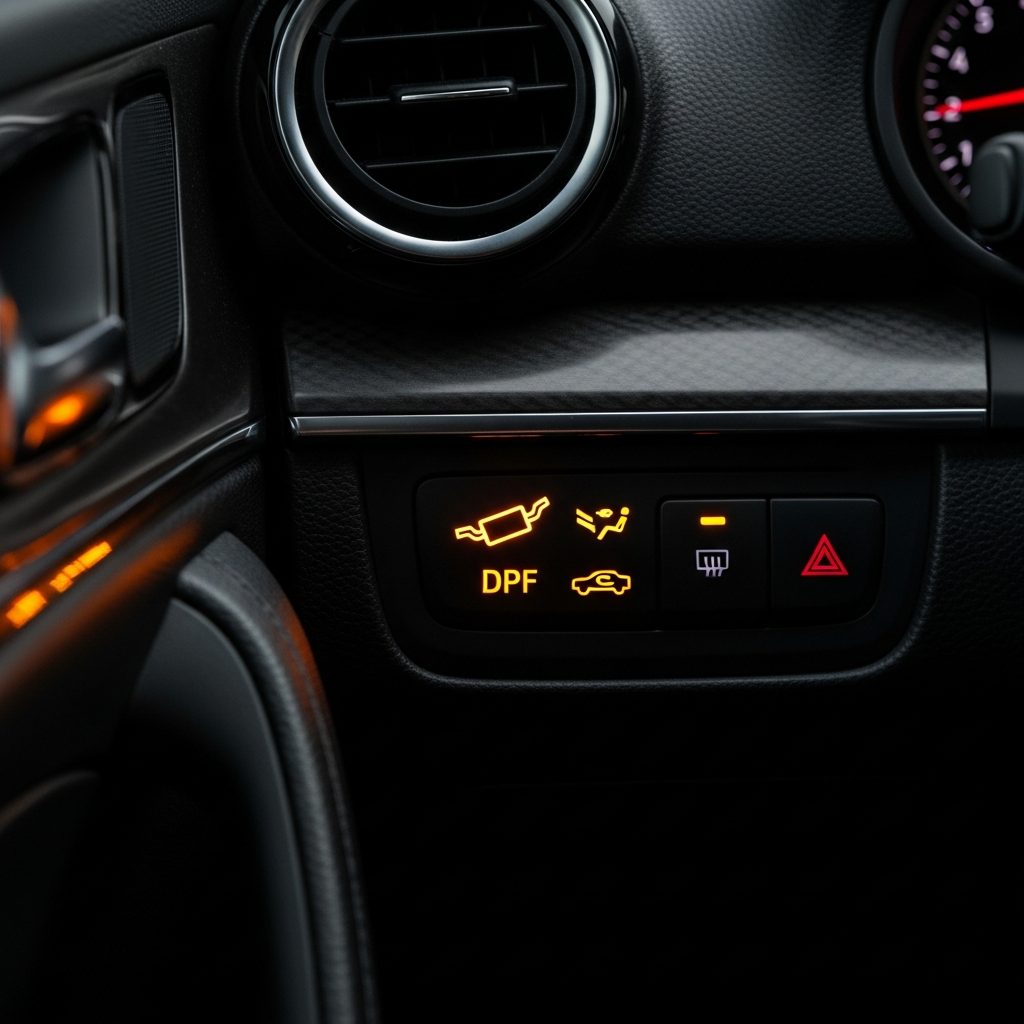
The clearest indicator. Your ECU monitors differential pressure across the DPF via a pressure sensor. When soot loading exceeds the threshold — typically 45–65% on most Euro 5/6 diesels — the DPF warning light illuminates (a box with dots inside). A more advanced blockage also triggers the amber engine management light. Both lights on together usually means the car is in, or close to, limp mode and requires immediate attention rather than a motorway run.
2Loss of Power or Limp Mode
When the DPF is severely blocked, exhaust cannot flow freely. Back-pressure climbs and the ECU restricts engine output to protect the turbo and internals. You will notice sluggish acceleration, reluctance to rev past 2,500–3,000 rpm, and sometimes a full limp mode capping speed around 30 mph. This is not a temporary quirk — it is the ECU telling you the filter needs attention immediately. Driving in limp mode with a blocked DPF for extended periods can cause permanent turbocharger damage.
3Increased Fuel Consumption
A restricted exhaust outlet means the engine works harder for the same output — burning more fuel in the process. A drop of 10–15% in MPG over a few weeks of short-journey driving is a reliable early indicator. Modern diesels also inject extra fuel during active DPF regeneration to raise exhaust temperatures above 550°C and burn off soot; if active regens are happening more frequently, fuel consumption rises noticeably even before any warning light appears.
4Rough Idle or Difficult Cold Start
A heavily loaded DPF disrupts combustion efficiency. On cold starts, the restriction can cause misfires at idle, extended cranking before the engine fires, and a rough, lumpy idle that smooths out only once the engine warms up. This is often misdiagnosed as a glow plug or injector fault — a full diagnostic read will separate the cause quickly. If your diesel idles roughly on cold mornings but clears after a few minutes, do not rule out the DPF.
5Dark Exhaust Smoke or Strong Diesel Smell
When a regeneration cycle fails to complete — because the journey ended too soon — unburned soot accumulates in the filter. On the next cold start, some of this exits as dark grey or black smoke, particularly at idle. A strong diesel smell from the exhaust at idle is a reliable sign that incomplete regens are stacking up. White or blue-tinged smoke at startup can indicate oil passing through the system — often the turbo oil seals failing under prolonged back-pressure stress.

6Cooling Fan Running After Short Trips
If you park after a short urban drive and hear the cooling fan continuing for 5–10 minutes, the car most likely attempted a regeneration but could not complete it. The exhaust system holds significant residual heat that needs dissipating. The fan running is the car protecting the DPF housing and catalyst from heat soak damage. On its own it is not an emergency — but if it happens consistently after every short trip, your filter is approaching the point where it will need professional intervention rather than another attempted regen run.
7Frequent or Incomplete Active Regeneration Attempts
If you notice a slight increase in idle revs, a hot exhaust smell when stationary, or a faint burning smell from the exhaust area — your car may be in an active regeneration cycle. Normal interval is every 300–500 miles. If this is happening every two or three journeys, the DPF is not clearing efficiently and is reloading faster than the regen can manage. Live diagnostic data showing DPF soot mass loading above 80% without a successful regen confirms a filter that needs professional cleaning — not another regen attempt.
What Causes a DPF to Block?
Understanding the root cause prevents the problem recurring after a clean or replacement.
Short Journey Driving
The most common cause. Passive regeneration needs exhaust temperatures above 350°C sustained for at least 10–15 minutes. A daily 3-mile commute never reaches that threshold. Soot accumulates faster than it burns.
EGR Valve Faults
A sticky or leaking EGR recirculates oily combustion gases through the inlet, coating the DPF with deposits that cannot be cleared by normal regeneration. See our guide to EGR vs DPF fault symptoms if unsure which system is causing problems.
Wrong Engine Oil
DPF-equipped diesels require low-SAPS oil (C1, C2, or C3 rated). Standard oil produces inorganic ash during combustion that cannot be burned off and permanently blocks the substrate over time.
Faulty Injectors or Glow Plugs
Dribbling injectors add excess unburned fuel to the exhaust stream, massively increasing soot production. A faulty glow plug on cold starts means poor combustion on every cold morning — all loading the DPF faster.
Why Ignoring the Signs Gets Expensive
The cost of DPF problems escalates quickly based on when you intervene. According to vehicle repair cost data, a blocked DPF left untreated can cause turbo or injector damage costing £1,000–£2,500+ — versus £150–£400 for a professional DPF clean when caught early.
| When You Act | Typical Cost | What Is Involved |
|---|---|---|
| Motorway regen (early warning light) | Free | 30+ min at motorway speed in 4th gear, 50+ mph |
| Professional forced regen / chemical clean | £80–£250 | Live data monitored, forced soot burn at workshop |
| Off-car DPF professional clean | £150–£400 | Filter removed, pressure washed, baked, refitted |
| DPF replacement | £900–£2,500 | New unit, labour — varies by vehicle |
| Turbocharger replacement (secondary damage) | £1,000–£2,500+ | Result of prolonged elevated back-pressure |
Your DPF Options at Stoke Tuning
We offer a full range of DPF solutions at our Stoke-on-Trent workshop — from professional forced regeneration and chemical cleaning through to software-based DPF-off solutions for vehicles used off-road or for export. Every job starts with a live diagnostic read so you know exactly what you are dealing with before spending anything.
If you are deciding between approaches, our DPF cleaning vs DPF removal guide covers the options in full. Not sure which applies to your situation? Book in for a free diagnostic assessment.
Think Your DPF Is Blocked?
Bring your vehicle to Stoke Tuning in Stoke-on-Trent. We will run live diagnostic data, read soot mass loading, and advise the most cost-effective fix — from a forced regen to a DPF-off solution.
Frequently Asked Questions
What are the first signs of a partially blocked DPF?
The earliest signs are a slight drop in fuel economy, the cooling fan running longer after short trips, and more frequent active regeneration cycles. Most drivers notice these before any warning light appears — the DPF light indicates moderate to heavy loading, so a partially blocked filter may show no dashboard warning at all.
Can you drive with a blocked DPF?
Not safely. A moderately blocked DPF at the warning light stage can sometimes be cleared with a sustained motorway run. But continuing to ignore the light risks secondary turbo and injector damage. A severely blocked DPF in limp mode should not be driven until assessed — continued use under elevated back-pressure can cause catastrophic turbo failure.
How do I know if my DPF needs cleaning or replacing?
A professional diagnostic read checks both soot mass loading and ash loading. High soot alone often clears with a forced regen or off-car clean. High ash loading — ash cannot be burned off — means the substrate is permanently restricted and replacement is the only option. We check both at Stoke Tuning before recommending any work.
Will a blocked DPF cause limp mode?
Yes. When the DPF is severely clogged, back-pressure causes the ECU to restrict engine output to protect the turbo. This presents as limp mode — reduced power and capped revs. Clearing the blockage typically resolves limp mode. If limp mode persists after a DPF clean, turbo or pressure sensor damage may have occurred and will need separate diagnosis.