
There is no line on a V5C for it, no MOT check for it, and no warning light that tells you. A used car can have had its ECU rewritten three owners ago and look completely ordinary on a forecourt. Yet if it has, and nobody declared it, the person holding the risk is whoever owns the car next.
This guide is the practical version: what a private buyer can genuinely check in twenty minutes, what only a diagnostic read will tell you, and what to actually do if the answer turns out to be yes.
Reviewed and signed off by Stoke Tuning
The Short Answer
You cannot tell that a used car has been remapped by looking at it. The reliable checks are a diagnostic read of the ECU’s software identifiers, tamper marks around the ECU or OBD port, and the paperwork trail. Everything else — how it drives, what the seller says, what the MOT history shows — is circumstantial evidence that tells you where to look.
Why It Matters to a Buyer
Three reasons, in order of how much they are likely to cost you.
Insurance
An ECU remap is a modification. Insurers ask about modifications, and an undeclared one sitting on a car you have just bought is a problem you inherited without knowing. You cannot declare what you do not know about, which is exactly why finding out before you hand over money matters. We go through what insurers actually ask and how to phrase it in our guide to declaring a remap to your insurer.
Unknown quality
A remap is only as good as the person who wrote it. A carefully calibrated file on a healthy engine is a non-event. A cheap generic file loaded off a laptop in a car park, with the safety limits stripped out to make a bigger number, is a different object entirely — and it looks identical from the driver’s seat until something lets go.
Emissions and MOT
Software that has been changed to hide or work around an emissions fault will eventually meet an MOT tester. Since 20 May 2018 the MOT has applied stricter emissions limits to diesel cars fitted with a particulate filter, with defects graded dangerous, major or minor. Buying a car with a hidden emissions workaround means buying its next MOT failure too.
Six Checks, Ranked by How Much They Prove
Start at the top. The first three are free and you can do them before you travel to see the car.
1. Read the MOT history — free, five minutes
The DVSA service shows every past pass and fail, the mileage recorded at each test, which parts failed and which had minor problems, going back to 2005 for cars. You are not looking for the word “remap”, which will never appear. You are looking for a pattern: repeated emissions advisories, a sudden clean run after years of smoke comments, or mileage that jumps then stalls.
2. Check for outstanding recalls — free, two minutes
DVSA also publishes a free safety recall check by registration. It is worth doing on any used car, and it has a specific relevance here: several manufacturer emissions-related software updates were issued as recalls or service actions. A car showing an outstanding software action may simply have never been back to a franchise — or may have had non-standard software that made the owner reluctant to go.
3. Interrogate the paperwork
Ask for the full service history and read it rather than flicking through it. Two things stand out: a gap of several years around a mileage spike, and invoices from a tuning specialist that the advert did not mention. Ask the seller directly and in writing whether the car has been remapped. The answer, in writing, is useful to you either way.
4. Look at the ECU and OBD port physically
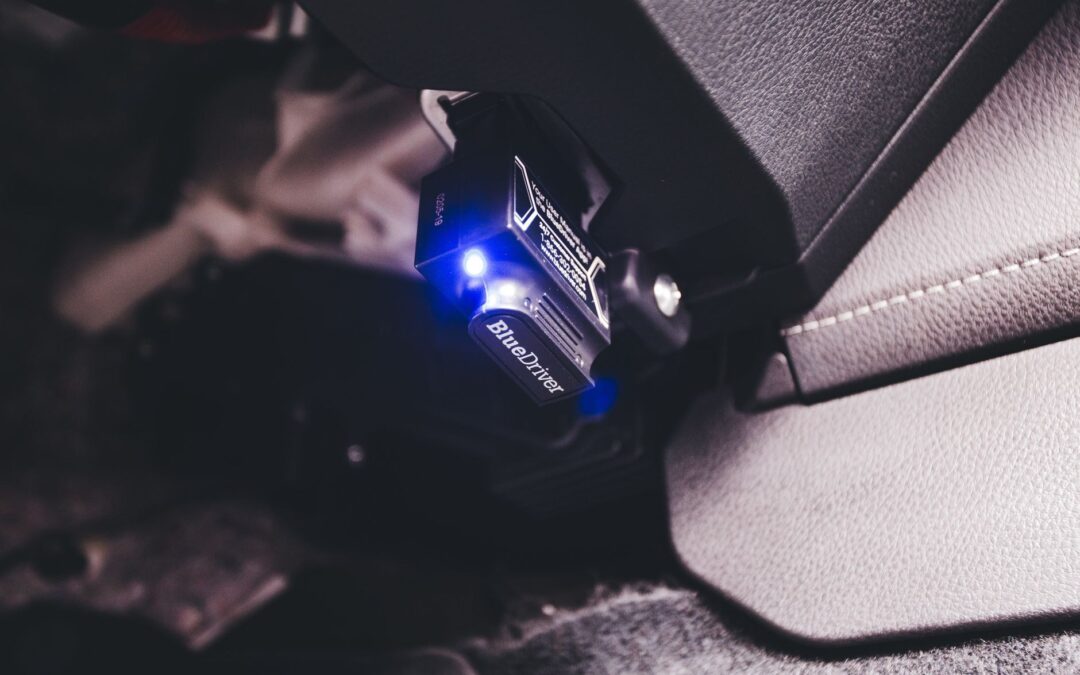
Most remapping today is done through the OBD port, which leaves nothing to see. But bench work does. Look for a disturbed ECU case, screws with fresh tool marks or the wrong head type, cut and re-soldered wiring near the ECU connector, tamper-evident stickers that are broken or missing, and adhesive residue where a seal used to be. On some vehicles the ECU sits in the scuttle under the wipers, so look there as well as in the engine bay.
5. Drive it honestly
Compare what you feel against the manufacturer’s figures for that exact engine and model year. A remapped diesel typically shows a strong, flat shove from about 1,800rpm that arrives earlier and harder than a standard car of the same output. It is a soft signal, not proof — a healthy standard car with a light clutch and a low first gear can feel eager too.
6. Get a diagnostic read — the only check that actually proves it
This is the one that settles it. A proper diagnostic session reads the ECU’s software and calibration identifiers and compares them against what the manufacturer shipped for that vehicle. A mismatched or unrecognised calibration number is not circumstantial: it is the software telling you it is not the software that left the factory. A read also surfaces stored and pending fault codes, adaptation values and any checksum irregularity. If you are buying anything expensive, this is the twenty minutes of the whole process that is worth paying for — it is the same advanced diagnostics work we do before we touch anyone’s car.

Reading the Circumstantial Signals
None of these prove anything on their own. Two or three together are a reason to insist on a diagnostic read before you buy.
| What you notice | What it might mean | How much weight to give it |
|---|---|---|
| Unrecognised calibration ID on a diagnostic read | Non-factory software present | Conclusive |
| Tamper marks or broken seals on the ECU | Bench programming has been done | Strong |
| Invoice from a tuning firm in the history | Work was carried out | Strong |
| Aftermarket intake, exhaust or intercooler fitted | Owner was chasing power; software often follows | Moderate |
| Enthusiast forum or club stickers, track day evidence | Enthusiast ownership | Weak on its own |
| Feels quicker than the brochure figure | Could be software, could be a good example | Weak on its own |
What most buying guides get wrong
They tell you to look for a “chip” fitted to the engine. On any car built this century that advice is thirty years out of date — the change is in the software, and the only thing to see is what was left behind by the person who put it there.
A Remap Is Not Automatically Bad News
It is worth being clear about this, because a lot of buying advice treats any modification as a red flag. A well-executed remap on a well-maintained car is not a defect, and plenty of remapped cars go on to enormous mileages without drama. What matters is the answer to three questions.
- Who wrote it, and can you find out? A named business with an address and a paper trail is a completely different proposition to an anonymous file.
- Was the car healthy when it was done? Software applied to a tired engine accelerates whatever was already going wrong. We have written before about what remapping does to engine longevity over the long term.
- Has it been declared and serviced accordingly? Declared on the insurance, and serviced on time, is the profile of a car that was looked after.
Equally, the car being standard is not a guarantee of anything either. A neglected standard car will cost you more than a cared-for modified one.

What to Do If You Find One
You have three routes, and the right one depends on why the car was remapped in the first place.
Keep it, and declare it
If a diagnostic read shows healthy live data and no stored faults, and you are happy with how it drives, the job is simply to tell your insurer and to keep servicing it properly. Most drivers find the premium difference minor. What we tell people to expect afterwards is much the same as we set out in our guide to what changes after a remap.
Have it rewritten properly
If the file looks crude — excessive boost demand, high exhaust temperatures, poor drivability, limits pushed for a headline figure — the fix is a proper calibration, not living with someone else’s shortcut. This is common on cars bought from an enthusiast owner who chased numbers.
Return it to standard
Sometimes the cleanest answer, particularly if you are keeping the car a long time, want the simplest insurance position, or the previous file is masking a fault that needs finding. Any competent tuner can write a factory calibration back to the ECU.
One thing not to do: ignore it and hope. An undeclared modification does not become declared by the passage of time, and a bad file does not improve with mileage.
If You Are the One Selling
Disclose it. A remapped car with an invoice from a named specialist, a declaration on the insurance and a service history to match is an easy sell. A remapped car discovered by the buyer’s diagnostic read on the driveway is a collapsed sale and an awkward conversation. If you would rather sell it standard, have the original file written back before you advertise it, and say so honestly.
Want a Car Checked Before You Buy?
Stoke Tuning reads ECU software identifiers, stored fault codes and live data across Stoke-on-Trent, Newcastle-under-Lyme and North Staffordshire, with a mobile option so we can look at a car where it stands. Send us the registration and what you are being told about it, and we will tell you what the car says for itself.
Frequently Asked Questions
Can a garage tell if a car has been remapped?
Yes, with the right equipment. Reading the ECU’s software and calibration identifiers and comparing them to the manufacturer’s records is the definitive test. A visual inspection or a road test is not, and a basic code reader will usually tell you nothing about it at all.
Will a remap show up on an MOT?
Not directly — the MOT does not test ECU software. What it tests is the result, including emissions, and stricter limits have applied to diesels with a particulate filter since May 2018. Software written to hide an emissions problem tends to surface as a test failure rather than as a remap finding.
Does a remap have to be declared when selling a car privately?
You must not give a buyer a false or misleading description of the car. If you are asked whether it has been modified, answer honestly; if you are not asked, disclosing it anyway is still the sensible course, because a buyer who finds out afterwards has a grievance and you have a dispute.
Can a remap be removed from a used car?
Yes. The factory calibration can be written back to the ECU, returning the car to its standard software. It is a routine job. Bear in mind that reverting the software does not undo any mechanical wear that a poor file may already have caused.
Is a remapped used car worth less?
It depends entirely on the buyer and the evidence. To a buyer who wants provenance and a simple insurance position, an undocumented remap reduces what they will pay. To a buyer who was going to have the work done anyway, a properly documented one from a known specialist can be a positive. Documentation is what moves it between those two.