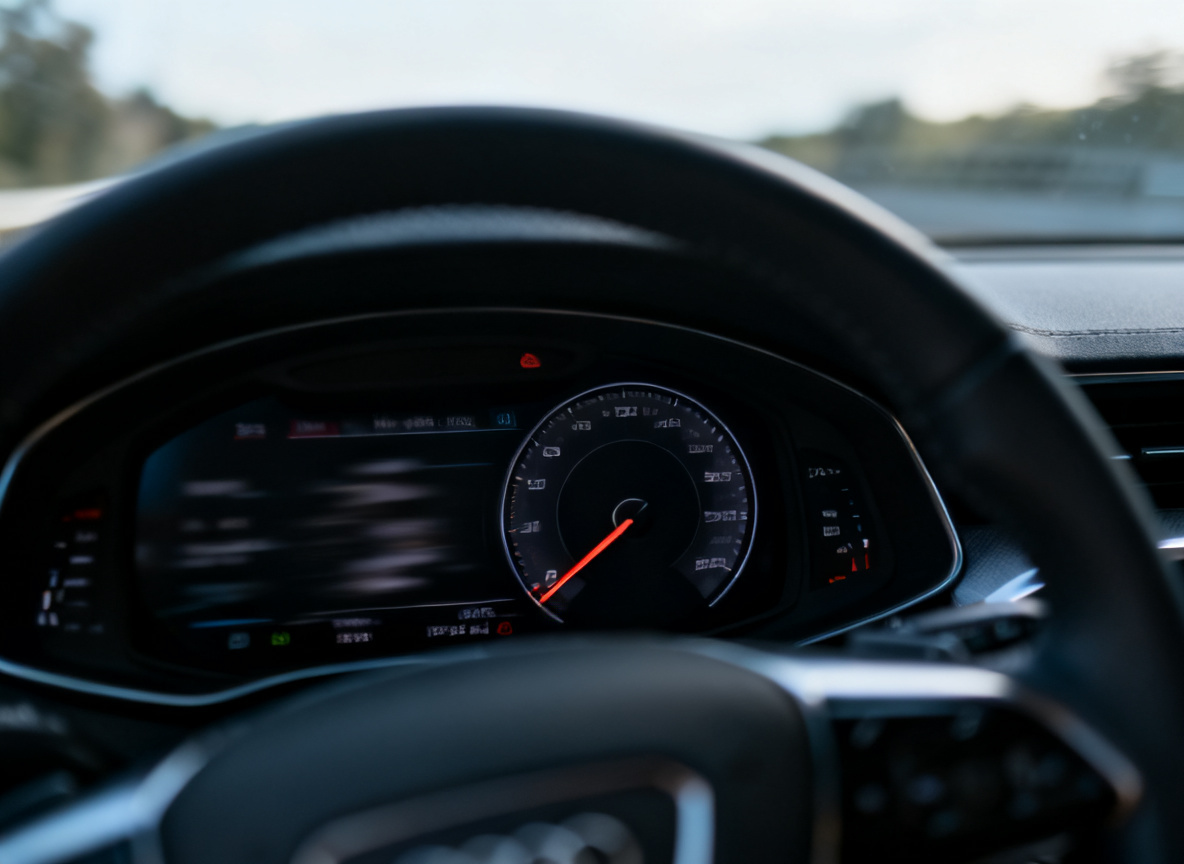
What to Expect After a Remap: The First Drive Explained
You’ve just spent money on an ECU remap and you’re sitting in the car park wondering if it’s all worked. This guide walks you through everything that happens in the first drive — what feels different, what is completely normal, and the handful of things that would actually warrant a phone call back to us.
Immediate changes you will notice
The moment you pull away from our unit in Stoke-on-Trent, most drivers notice something has shifted — even before they reach the main road. The changes are not imaginary. Your ECU has been written with a new calibration, and the engine is now operating to a different set of parameters.
The most common first impression is a feeling of readiness. The engine responds more willingly when you press the accelerator, and the power feels more linear — less of the flat spot or hesitation that many factory maps deliberately build in. Throttle response often feels sharper, particularly in the low-to-mid rev range where you spend most of your daily driving.
For diesel drivers, the difference in pulling power from low revs is often the headline change. Petrol drivers tend to notice a broader and more usable power band. Either way, the car you drove in is not quite the car you’re driving out — and that’s the point.
Throttle response and power delivery
Throttle response is one of the areas where drivers notice the biggest change, and it can take a short while to recalibrate your driving style. If you normally press the pedal 60% of the way down to merge onto a dual carriageway, you may find you now need considerably less.
This is not a fault — it is the map working correctly. The relationship between pedal input and engine response has been optimised. Over-revving at junctions or jerky low-speed driving in the first few miles is common as you find the new calibration point for your right foot.
Torque delivery — particularly on turbocharged engines — may feel earlier and stronger. Where a factory map might hold back peak torque until 2,000 rpm or higher, a remapped engine may deliver it sooner and hold it longer across the rev range. Again, this is expected behaviour, not a sign of something going wrong.
Give yourself around 20 to 30 miles before you form a firm judgement on the remap results. Some of what you’re feeling in the first few minutes is your own perception adjusting as much as the engine itself changing.
Gearbox adaptation period — automatic and DSG
This is the section most relevant to automatic and DSG gearbox owners, and it is also the most misunderstood part of the post-remap experience.
If your car has an automatic or dual-clutch gearbox, the gearbox control unit (TCU) has its own learned behaviour built up over time. It learns your driving style — when you typically change gear, how aggressively you accelerate, and how the engine responds to throttle input. When you remap the engine ECU, the TCU suddenly receives signals from an engine it doesn’t recognise.
The result is a gearbox that can feel slightly confused in the first 50 to 100 miles. You might notice:
- Earlier or later gear changes than expected
- A slight hesitation before downshifting under load
- More frequent kickdowns
- The gearbox hunting between gears in some speed ranges
All of these symptoms typically resolve as the TCU relearns. The process can be accelerated by varying your driving — mix motorway cruising with town driving, and don’t exclusively use Sport mode or Eco mode for the first few hundred miles.
DSG gearboxes on VAG vehicles (VW, Audi, Seat, Skoda) are particularly well-known for this adaptation period. The 7-speed dry-clutch DSG in particular may feel noticeably different for the first 50 miles. This settles down. If it hasn’t improved by 200 miles, give us a call.
Before remap vs after remap: first drive feel
Use this table as a reference point for what is a normal change versus what the car felt like before. These are typical experiences and individual results may vary depending on vehicle, age, and condition.
| Area | Before remap (factory map) | After remap (first drive) |
|---|---|---|
| Throttle response | Soft, delayed, predictable | Sharper, more immediate — takes adjustment |
| Low-rev torque (diesel) | Flat below 1,800–2,000 rpm | Stronger, more linear from lower in the rev range |
| Mid-range power | Builds gradually, often drops off | Broader power band, less of a peak and trough |
| Gearbox behaviour (auto/DSG) | Settled, consistent change points | May feel hesitant or hunt — normalises over 50–100 miles |
| Turbo spool (turbocharged engines) | Noticeable lag, especially from rest | Typically faster spool — less waiting for boost |
| Exhaust note | Largely unchanged from stock | May be marginally louder under load — normal |
| Fuel economy | Baseline as per manufacturer | May temporarily dip while driving style adjusts |
| Overall driving confidence | Familiar, possibly slightly flat | More engaging — needs short adjustment period |
What is normal in the first 100 miles
Knowing what to expect takes a lot of the anxiety out of the post-remap drive. Here is a plain list of things that are completely normal and do not require any action:
- A slightly unfamiliar throttle feel — your muscle memory is calibrated to the old map. Give it a few days.
- Auto gearbox hunting or changing at odd points — the TCU is relearning. Vary your driving style to speed this up.
- A slightly louder exhaust note at full throttle — more fuel and air going through the engine means more noise. This is normal.
- Feeling like you need less accelerator than before — you do. The map is more efficient at translating pedal input into power.
- Fuel economy that seems no better (or even slightly worse) in the first week — until your driving adapts, you may use the power more freely. Give it two to three weeks before assessing economy properly.
- Turbo kicking in earlier than expected — again, this is the new map doing its job. Not something to worry about.
- No warning lights — if there are none, the remap has loaded correctly and the engine management system is content.
What is NOT normal — warning signs to act on
We want you to feel confident after your remap, and part of that is being honest about the handful of things that would warrant getting back in touch. These are uncommon, but you should know what to look out for:
- Check engine light / engine management warning — a solid warning light after the remap has loaded is not something to ignore. Pull over safely, do not drive aggressively, and call us. A stored fault code after a remap can sometimes indicate a pre-existing issue that the higher load has exposed, rather than the remap itself causing a problem.
- Misfires or rough running — if the engine stumbles, misfires at idle, or runs unevenly under load, something needs attention. This could be a fuel delivery issue, a spark plug nearing the end of its life, or an injector fault that was borderline before the remap.
- Excessive black or white smoke — a small puff of black smoke under hard acceleration can be normal, particularly on diesel. Sustained black smoke or white smoke at any point is not.
- Loss of power compared to factory map — if the car feels no different, or slower than before, the remap may not have written correctly. Contact us straight away.
- Unusual noises under load — a knock or rattle that wasn’t there before, especially under acceleration, should be investigated before driving further.
- Boost cutting out repeatedly — occasional boost cut under very hard acceleration can be a safety feature. Consistent boost cut every time you accelerate is not normal and needs diagnosis via advanced diagnostics.
In most cases, these symptoms point to a pre-existing condition the car already had — a remap simply puts more load through the engine and can surface issues that were dormant at factory power levels. A remap is not a cause of these faults, but it can reveal them.
How long until full adaptation
There is no single answer that applies to every vehicle, but here is a realistic timeline for most cars:
The biggest adjustment phase. Throttle feels unfamiliar, auto gearboxes are recalibrating. Drive normally and let everything settle.
Auto/DSG boxes finding their rhythm. Throttle muscle memory improving. Power delivery starting to feel natural rather than surprising.
Full adaptation for most vehicles. Gearbox learned behaviour restored. Fuel economy starting to reflect the new calibration properly.
For Stage 2 remaps, where hardware modifications (intercooler, exhaust, induction kit) have also been fitted, the adaptation window can extend slightly longer as multiple systems settle together. This is normal.
Manual vs automatic — different first drive experiences
The post-remap experience differs meaningfully depending on your gearbox type.
Manual gearbox
Manual drivers are in full control of every gear change, so there is no adaptation period for the gearbox itself. The main adjustment is purely in your right foot. You will notice:
- The need for less throttle in each gear
- More flexibility to pull in high gear without dropping down
- A stronger mid-range that rewards fewer, earlier gear changes
Manual drivers often adapt within 10 to 20 miles. The remap results feel immediate and direct.
Automatic and DSG gearbox
Auto and DSG owners have the extra variable of the gearbox relearning. The experience can feel slightly inconsistent for the first 50 miles. Tips to speed up adaptation:
- Avoid leaving the car in Sport mode exclusively
- Mix urban, A-road, and motorway driving
- Avoid wheel-spinning starts or aggressive launches
- Let the gearbox make its own decisions rather than using paddle shifters constantly
After 100 miles of varied driving, most automatic gearboxes feel settled and natural again.
Stage 1 vs Stage 2 first drive differences
If you opted for a Stage 1 remap, the car is still using standard hardware — the new map is calibrated to work within the limits of your stock intercooler, exhaust, and air filter. The experience is a cleaner, more polished version of what you had before.
Stage 2 remaps are accompanied by hardware upgrades — typically a performance intercooler, induction kit, and decat or sports exhaust — and the map is written around those parts working together. The first drive experience with Stage 2 can be noticeably more pronounced:
- Induction noise is louder (the air filter is pulling harder)
- Exhaust note is more present, especially under load
- Turbo response may feel dramatically different — faster spool, harder pull
- The car may feel more alive at higher revs compared to a Stage 1
Neither is better for every driver. A Stage 1 remap on a well-serviced car is a reliable, everyday upgrade. Stage 2 is for drivers who want more and are prepared for a more involving driving experience. Both have the same adaptation principles — it just takes slightly more mental adjustment with Stage 2 if you haven’t experienced the hardware changes before.
Fuel economy expectations after a remap
This is the question we get asked most often, and it deserves an honest answer.
A well-executed remap can improve fuel economy — particularly for diesel drivers who do a lot of motorway or A-road driving. The engine produces more torque at lower revs, which means it can pull higher gears at lower speeds and work less hard to maintain cruising speed. That translates to less fuel burned over a given distance.
However, there is a very significant variable: your right foot. If you use the extra performance enthusiastically — and many drivers do, at least initially — your fuel economy will not improve and may briefly worsen. This is not the remap’s fault. It reflects the fact that the engine is delivering more power per litre of fuel burned, and you’re asking for that power more often.
The realistic fuel economy picture after a remap looks like this:
- First two weeks: Economy may be similar to before or slightly worse as you explore the new power
- Weeks three to six: Economy typically improves as you adapt your driving style
- Longer term: Diesel drivers doing regular longer journeys often report 5–15% improvement in real-world MPG — but individual results vary considerably
If you remapped the car primarily for economy reasons, the key is to drive with restraint in the first few weeks and let the map work for you rather than against you.
Frequently asked questions
My car feels no different after the remap. Is something wrong?
Give it 20 to 30 miles before forming a judgement. Some of the change is subtle and your brain adjusts quickly. That said, if after a full drive the car genuinely feels identical to before, contact us. It is possible the map did not write correctly, which is something we can check and resolve quickly.
My auto gearbox feels odd — is the remap causing it?
Almost certainly not in a harmful way. The gearbox control unit is relearning after the engine calibration changed. This is a normal and expected part of the post-remap process for automatic and DSG gearboxes. Vary your driving over the next 100 miles and it should settle. If it hasn’t improved after 200 miles, get in touch and we will take a look.
Can I go straight on a motorway after a remap?
Yes — there is no restriction on where you drive after a remap. We do recommend varied driving in the first 100 miles (town, A-road, motorway) to help gearbox adaptation if you have an auto or DSG box. Avoid prolonged hard driving or track use in the first 50 miles while everything settles, but normal motorway cruising is perfectly fine.
When should I first check for fault codes after a remap?
If you have access to an OBD reader, a scan after the first 10 to 15 miles of driving is a useful peace-of-mind check. A clean scan (no stored DTCs) confirms the ECU accepted the new calibration. If you see any fault codes, note them down and contact us — we will advise on whether they are remap-related or pre-existing faults. You can also book advanced diagnostics with us if you want a full readout.
Questions about your remap? We’re here.
Stoke Tuning is based in Stoke-on-Trent, Staffordshire. If anything from this guide has raised a question about your own remap — whether you’re booked in or have already had the work done — give us a call or drop us a message. We would rather you ask than drive around worrying.
Related: VW Golf Stage 1 Remap: BHP Gains and What Changes
Related: BMW 320d Stage 1 Remap: B47 Power Gains Explained
Related: Pops and Bangs Remap: Cost, Legality & What to Expect