Published: | Updated: | Written by the Stoke Tuning team
The Skoda Octavia is one of the most popular stage 1 remap candidates in the UK. It runs VAG Group TDI engines — the same architecture as the VW Golf and Audi A3 — which means there’s a wealth of mapped data, well-understood ECU behaviour, and reliable, predictable gains. This guide covers what to expect by engine, what actually changes in the tune, and whether a remap makes sense for your specific Octavia.
A stage 1 remap on a Skoda Octavia 1.6 TDI typically adds 30–45 bhp and a significant torque increase. The 2.0 TDI 150 bhp sees gains to around 190–200 bhp. All done via OBD port with no hardware changes. Most owners also report a 3–5 mpg improvement at motorway speeds, depending on how conservatively they drive the additional power.
Why the Skoda Octavia Remaps So Well
The Skoda Octavia shares its engine and ECU architecture with the VW Golf, Audi A3, and SEAT Leon. Every TDI Octavia from the Mk2 onwards uses a Bosch EDC17 common-rail injection management system — a well-documented platform with a long calibration history across the whole VAG Group.
What this means in practice is that the standard tune on a TDI Octavia leaves a significant performance margin on the table. Skoda uses the same hardware across multiple power outputs — so the 150 bhp 2.0 TDI and the 184 bhp version share the same engine internals. The factory limit is a commercial decision, not a hardware one. A stage 1 remap adjusts the fuelling maps, boost pressure targets, and injection timing within those hardware tolerances, releasing the headroom that’s already built in.
Because the ECU changes are made via the OBD port, a stage 1 remap requires no physical hardware modifications — no upgraded intercooler, turbo, or intake. It’s a clean software change that keeps the car road-legal and, in most cases, completely invisible unless you look for it.
BHP Gains by Engine Variant
Here are the typical stage 1 remap results for each Skoda Octavia TDI engine variant. Figures reflect calibrated software-only stage 1 remaps and are sourced from published performance data by established UK mapping specialists including Celtic Tuning.
| Engine | Stock BHP | Mapped BHP | Gain | Typical torque gain |
|---|---|---|---|---|
| 1.6 TDI CR (Mk2, 2010–2013) | 103 bhp | ~150 bhp | +47 bhp | +80–90 Nm |
| 1.6 TDI (Mk3, 2013–2020) | 108 bhp | ~153 bhp | +45 bhp | +80–90 Nm |
| 2.0 TDI PD (Mk2, 2004–2013) | 138 bhp | ~189 bhp | +51 bhp | +90–110 Nm |
| 2.0 TDI CR 150 (Mk3, 2013+) | 150 bhp | ~200 bhp | +50 bhp | +80–100 Nm |
| 2.0 TDI vRS 181 (Mk3, 2013+) | 181 bhp | ~221 bhp | +40 bhp | +60–80 Nm |
Note: Actual results vary by condition, odometer, turbo health, and individual calibration approach. The figures above reflect published stage 1 results from multiple calibration labs across the same engine variants. We can give you a more specific estimate for your car’s variant before booking.
The percentage gains look particularly high on the 1.6 TDI — over 40% in some cases — because the stock tune is quite conservative. The hardware on the 1.6 is capable of more, and the factory calibration holds it back to hit a lower output tier for commercial reasons. That’s where the remapper recovers the headroom.
The 2.0 TDI CR 150 is arguably the most popular remap in the range. It’s found in a huge number of Octavia Mk3s, it’s a strong, reliable engine with good turbo headroom, and the stage 1 result puts it well above the vRS in terms of power-to-cost ratio.
If you’re interested in how the Skoda compares to other VAG Group remaps, see our guide on Stage 2 remap hardware limits on VAG, BMW and Ford platforms — it covers where the ceiling sits once you go beyond software-only tuning.
What a Stage 1 Remap Actually Changes
A stage 1 remap on the Skoda Octavia TDI modifies the ECU calibration data — not the hardware. Here’s what changes at a map level:
Boost pressure targets
The turbocharger produces more pressure across the rev range, particularly in the mid-range where TDI engines do most of their work. This is where you feel the difference day to day — earlier boost delivery, stronger pull from lower revs.
Fuelling maps
Injection quantity and timing are adjusted to match the higher boost. The fuel delivery curve is tuned to maintain safe air-to-fuel ratios at the new boost targets — this is what produces the power increase without creating excess heat or smoke.
Injection timing
Adjusting when fuel is injected in the combustion cycle affects both power and efficiency. On TDI engines, optimising injection timing is one of the biggest contributors to the fuel economy improvement many owners report after a remap.
Torque limiters
The factory ECU includes torque limits set for the lowest-spec gearbox variant across the model line. On a standard Octavia with the 6-speed DSG or manual, these limits are often well below what the gearbox can comfortably handle. A good remap raises them appropriately without exceeding the drivetrain’s actual limits.
What doesn’t change: the engine management self-protection functions, cold-start behaviour, idle speed, or DPF regeneration cycles. A stage 1 remap works with the existing hardware and software architecture, not against it.
For a broader overview of what to expect after remapping, see what changes after an ECU remap.
Fuel Economy After a Stage 1 Remap
Fuel economy improvement after a remap is one of the questions we get most often, and the answer is genuinely “it depends” — on driving style more than anything else.

The mechanism is real: a remapped TDI produces more torque at lower revs, which means you need less throttle input to maintain motorway speed or pull away from junctions. Less throttle input means less fuel. For drivers who cruise steadily on motorways or A-roads, 3–5 mpg improvement is consistently reported.
Where the improvement evaporates is when drivers use the extra power. If the additional torque prompts earlier overtakes, harder acceleration, or more frequent high-revs use, the economy benefit disappears. The physics is straightforward: more fuel burnt equals more power equals lower mpg.
For a fleet operator or high-mileage commuter who drives conservatively, the fuel saving can, over time, offset a meaningful portion of the remap cost. For someone who wants to feel the performance difference, the economy benefit is more of a bonus than a reason to remap.
What to Expect on the Day
A stage 1 remap on a Skoda Octavia TDI typically takes 60–90 minutes, depending on the specific ECU variant. The process:
- A pre-remap check of the vehicle’s fault codes — any active faults (particularly boost, fuelling, or turbo-related) need to be addressed before mapping. A remap won’t fix an underlying mechanical issue.
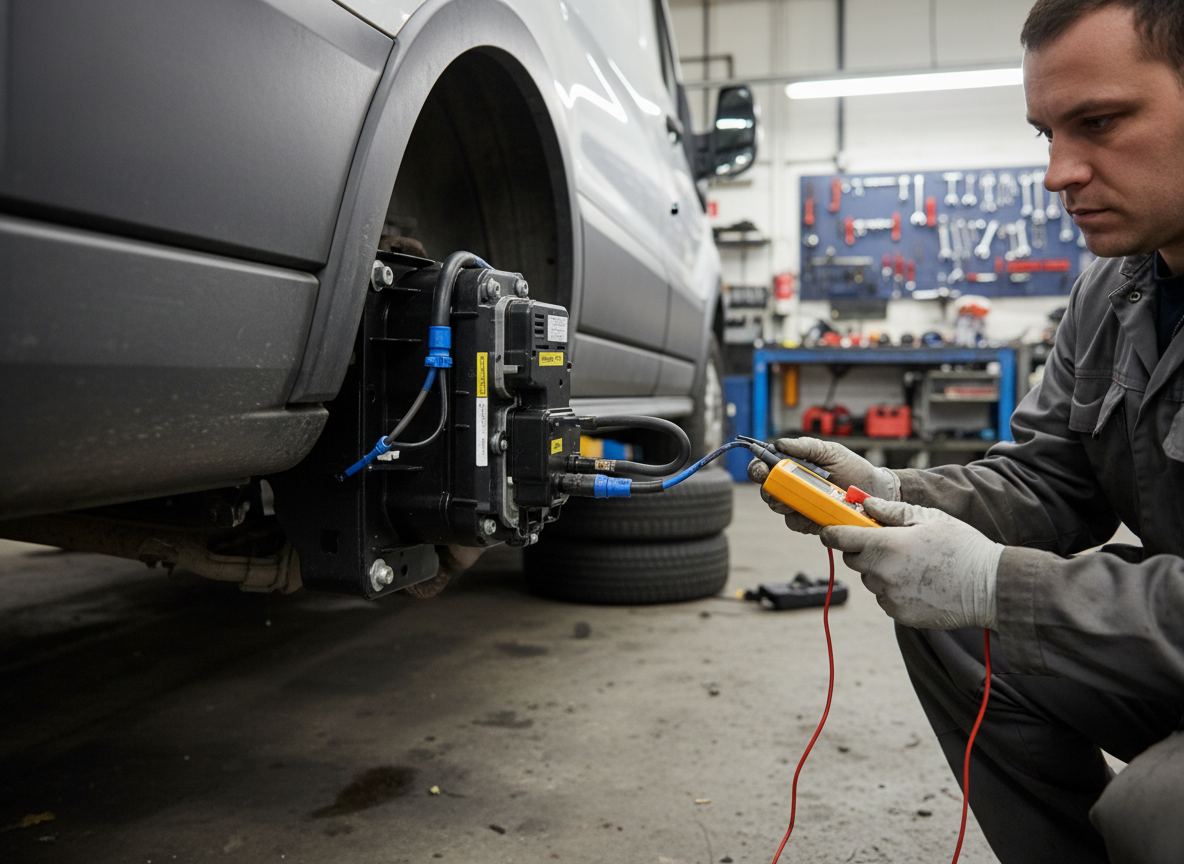
- The ECU is read via the OBD port. On most Octavia TDI variants this is straightforward; some older units may require bench access.
- The calibration file is modified and written back. We use verified files from established calibration sources, not generic off-the-shelf maps.
- A post-remap road test to confirm the map is reading correctly, boost is holding, and there are no new fault codes.
The car drives home on the same day. There’s no running-in period. You should notice the difference immediately — particularly the mid-range torque delivery, which is where TDI remaps make the biggest subjective difference to daily driving.
We offer a stage 1 remap service from our base in Stoke-on-Trent, covering Staffordshire, Cheshire East, and the surrounding area. Call 07503 078486 to check availability and get a price for your specific Octavia variant.
Book Your Skoda Octavia Stage 1 Remap
Stoke-on-Trent, Staffordshire, and Cheshire. 60–90 minute appointment. Call 07503 078486 or use the contact form.
Frequently Asked Questions
How much BHP does a stage 1 remap add to a Skoda Octavia?
It depends on the engine. A 1.6 TDI 108 bhp typically gains around 40–45 bhp to reach approximately 150–153 bhp. A 2.0 TDI 150 bhp gains around 45–50 bhp to reach approximately 195–200 bhp. The 2.0 TDI vRS 181 bhp typically gains 35–40 bhp. All stage 1 remaps use software only — no hardware upgrades required.
Is a stage 1 remap safe for a Skoda Octavia?
Yes, when carried out properly. The Skoda Octavia TDI engines are well-understood platforms, and a stage 1 remap works within the hardware’s actual tolerances — not beyond them. A good remap should not affect engine longevity or reliability. The risk comes from poor-quality or overly aggressive files, which is why choosing a reputable calibrator matters more than the price difference.
Does remapping a Skoda Octavia improve fuel economy?
Often, yes — particularly for motorway or steady-pace driving. The additional torque at lower revs means less throttle input is needed to maintain speed, which reduces fuel consumption. Real-world improvements of 3–5 mpg are commonly reported. However, if you use the extra power aggressively, the economy benefit will not materialise.
Does a remap affect the Skoda Octavia’s warranty?
A stage 1 remap is a modification that your manufacturer warranty does not cover. If your Octavia is still under dealer warranty, you should factor this in before booking. For most used Octavias outside warranty, it is not a relevant concern. You should also inform your insurer of any modifications — see our guide on what to declare to insurance after a remap.
How long does a Skoda Octavia stage 1 remap take?
Typically 60–90 minutes, including a pre-remap health check and a post-remap road test. You drive home on the same day. There’s no running-in period — you’ll feel the difference immediately.
Conclusion
The Skoda Octavia TDI is one of the better stage 1 remap candidates available. The gains are significant, the process is clean, and the results are well-documented across the VAG platform. Whether you’re after the better mid-range pull for daily driving or the fuel economy improvement for high-mileage use, a well-executed stage 1 remap changes the character of the car noticeably without requiring any hardware modification.
We remap Skoda Octavia TDI engines across Stoke-on-Trent, Newcastle-under-Lyme, and wider Staffordshire. Call 07503 078486 or use the contact page to book.