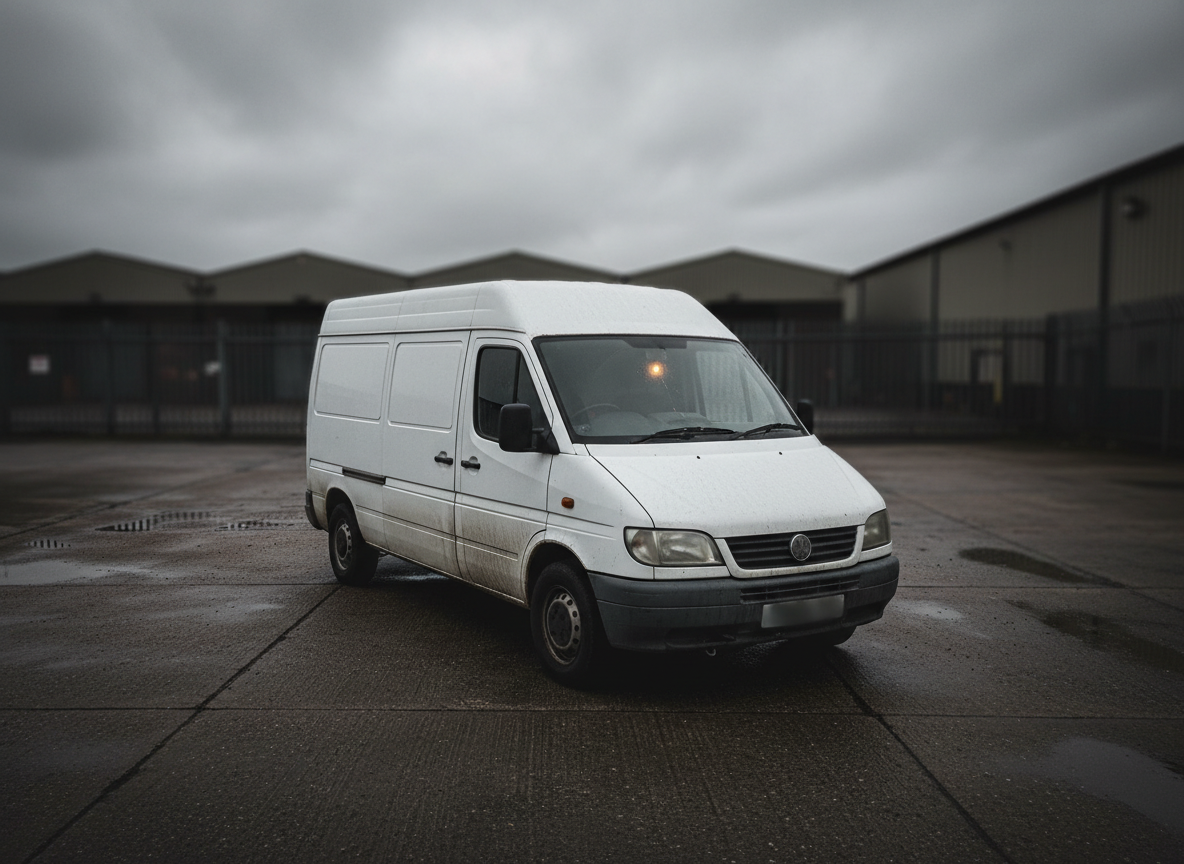
Ford Transit AdBlue Fault: Warning Messages and What to Do Next
The Ford Transit is the UK’s best-selling commercial van — and one of the most common vehicles we see at Stoke Tuning with AdBlue-related faults. Whether your dashboard is showing an early warning or you’re counting down to a no-start, this guide explains exactly what each message means, why faults develop, and what your options are.
Why Ford Transits Suffer AdBlue Faults
Ford introduced AdBlue (Diesel Exhaust Fluid, or DEF) across the Transit range from around 2016 onwards when Euro 6 emissions regulations came into force. The system injects a fine mist of urea solution into the exhaust stream, triggering a chemical reaction in the SCR (Selective Catalytic Reduction) catalyst that converts harmful nitrogen oxides (NOx) into harmless nitrogen and water vapour.
In theory, the system is straightforward. In practice, the combination of vibration, heat cycling, contamination risk, and the corrosive nature of AdBlue itself means the Transit’s SCR system is exposed to quite a lot of wear — especially on high-mileage vans used in trade environments.
A few factors make Transits particularly prone to faults:
- High annual mileage. Trade Transits often cover 30,000–60,000 miles a year. Every component in the AdBlue circuit is under more strain than a typical car.
- Short runs and cold starts. Builders, plumbers, and delivery drivers doing lots of short local trips don’t always get the exhaust hot enough to burn off moisture and deposits in the system.
- Incorrect fluid top-ups. Putting the wrong concentration of AdBlue in, or accidentally contaminating it with diesel, can damage the dosing pump and injector within a single tank.
- Sensor sensitivity. Ford’s NOx sensors and quality sensors are quick to flag deviations. A genuine fault and a sensor failure can produce identical warning messages.
- Crystallisation. AdBlue crystallises when it dries out — and the Transit’s dosing injector sits directly in the exhaust stream, making it vulnerable to build-up after repeated heat and cool cycles.
The 2.0 EcoBlue engine fitted to Transits from 2016 onwards is particularly common in our workshop. It is a capable engine, but the SCR system requires regular attention — especially on vans above 80,000 miles.
The Ford Transit AdBlue Warning Message Countdown
Ford’s SCR system uses a staged countdown to alert drivers before imposing a no-start lockout. The exact messages vary slightly between Transit generations and instrument cluster types, but the progression follows the same pattern. Below is the typical countdown sequence you will see.
| Stage | Approx. km Remaining | Dashboard Message | Action Required |
|---|---|---|---|
| 1 — Low level | ~2,400 km | “AdBlue: Top up soon. Range: X km” | Plan a top-up. No urgency yet. |
| 2 — Low level (closer) | ~1,600 km | “AdBlue: Top up required. Range: X km” | Top up as soon as possible. |
| 3 — Critical | ~800 km | “AdBlue: Range critically low. Top up now.” | Top up immediately — do not delay. |
| 4 — Lockout warning | ~0–200 km | “AdBlue: Vehicle may not restart. See dealer.” | Do not turn off ignition. Seek help now. |
| 5 — No-start lockout | 0 km / tank empty | “AdBlue: Vehicle will not restart.” | Van will not start until tank is filled and system resets. |
| 6 — System fault | Any level | “AdBlue system fault. See dealer.” | Component fault — not a low-level issue. Diagnostic scan required. |
Common AdBlue Fault Causes on the Ford Transit
When a Ford Transit throws an SCR or AdBlue system fault, there are a handful of components that account for the vast majority of real-world failures. Here is what we find most often at Stoke Tuning.
Heater Element Failure
AdBlue freezes at -11°C, so Ford Transits have a heater built into the tank. When this heater element fails, the system cannot warm the fluid to the correct operating temperature. The ECU detects the temperature fault and raises a warning. This is a particularly common failure in older Transits that spend winter outdoors in Staffordshire and the surrounding area.
Dosing Pump Failure
The dosing pump draws AdBlue from the tank and delivers it to the injector at the correct pressure and volume. Contamination — from wrong-concentration fluid, diesel ingress, or mineral deposits — is the most frequent cause of pump failure. A failed pump means no fluid reaches the exhaust, and the SCR catalyst cannot do its job. The Ford Transit’s dosing pump is a common wear item on higher-mileage vehicles.
NOx Sensor Fault
Ford Transits typically run two NOx sensors — one upstream and one downstream of the SCR catalyst. These measure how much NOx is going in versus coming out. If a sensor fails or gives readings outside the expected range, the ECU will log a fault even if the SCR system itself is working fine. Sensor replacement is sometimes all that is needed, but a full diagnostic is required to confirm this before spending money on parts.
Poor DEF Quality / Contamination
AdBlue must meet the ISO 22241 standard — 32.5% urea concentration. Using watered-down fluid, fuel-station product that has degraded past its shelf life, or accidentally contaminating the tank will trigger a quality fault. The DEF quality sensor is sensitive and can flag issues quickly. Always use the correct blue-capped filler and fresh, sealed fluid.
Crystallisation / Blocked Injector
When the AdBlue injector sits at operating temperature and then cools, residual fluid can dry out and form white crystalline deposits. Over time these deposits build up and restrict — or fully block — the injector. The result is reduced or zero dosing, poor NOx conversion, and a system fault. Cleaning or replacing the injector is required to resolve this.
SCR Catalyst Degradation
Less common but worth mentioning: the SCR catalyst itself can degrade at very high mileages or after contamination events. If the catalyst is no longer converting NOx efficiently, the downstream NOx sensor will detect elevated levels and flag a fault. This is typically a more involved repair and requires a full system assessment to confirm before any work is carried out.
What Ford Transit AdBlue Fault Codes Mean
When a diagnostic tool is plugged in, the ECU typically stores one or more fault codes related to the SCR and AdBlue system. Here are the codes we see most frequently on Ford Transit vans, and what they indicate.
| Fault Code | Description | Likely Cause |
|---|---|---|
| P20EE | SCR NOx catalyst efficiency below threshold — bank 1 | Failing SCR catalyst, dosing pump fault, contaminated AdBlue |
| P229F | Reductant quality performance | Wrong or degraded AdBlue, quality sensor fault |
| P2BAD | Reductant concentration too low | Watered-down AdBlue, old or degraded fluid |
| P204F | Reductant system performance | Dosing pump fault, injector blockage, pressure loss |
| P2047 | Reductant injection valve — circuit open (bank 1, unit 1) | Dosing injector wiring fault or failed injector |
| P2BA9 | Reductant heater control circuit fault | Failed tank heater element or wiring |
| U3000 series | SCR module communication faults | Wiring fault, module failure, or CAN bus issue |
Repair vs AdBlue Delete: Which Option Is Right for Your Transit?
Once you know what is wrong, you have a decision to make. For most Transit owners, the choice comes down to two paths.
AdBlue Repair
If the fault is a failed component — a dosing pump, heater element, NOx sensor, or blocked injector — replacing the part and performing a proper system reset will return the van to full working order. This is the right approach when the fault is isolated, the rest of the SCR system is healthy, and you want to keep the van road-legal for MOT and emissions testing without any software modifications.
We carry out AdBlue repairs at Stoke Tuning in Stoke-on-Trent. For complex multi-component failures — particularly on high-mileage fleet vans — we may also refer you to our colleagues at Adblue Specialist, who focus specifically on heavy-duty SCR fault diagnosis and repair.
AdBlue Delete
For vehicles that are used off-road, on private land, or where the owner has made an informed decision about emissions compliance, an AdBlue delete removes the SCR system from the ECU’s control loop entirely. The van no longer monitors or requires AdBlue to operate. Warning lights are cleared, the countdown lockout is removed, and ongoing AdBlue-related faults are eliminated at the software level.
Choose repair if:
- The fault is a single identifiable component failure
- The van is used on public roads
- The vehicle must pass an MOT emissions test
- You want to keep the van fully standard
Consider delete if:
- Multiple component failures make repair uneconomical
- Vehicle is used off-road or on private land only
- Recurring fault history with no lasting fix
- Fleet vehicle taken off public road use
When to Act Urgently: The No-Start Countdown
The most important thing to understand about Ford’s AdBlue system is that it will prevent the engine from starting once the SCR condition falls outside acceptable limits. This is not a soft advisory warning — the van will physically not crank if the lockout condition is met.
There are two distinct no-start scenarios, and they require different responses:
Scenario A — Empty tank lockout
You have run the AdBlue tank dry despite the warning messages. Ford typically allows a small number of additional engine starts before imposing a full lockout — just enough to move the vehicle to safety. Topping up the tank and cycling the ignition will usually reset this, but the system needs time to purge and reprime before it will confirm the fluid level is correct.
Scenario B — Component fault lockout
The system has logged a fault serious enough that the ECU will not permit further starts until the fault is resolved. Topping up fluid will not help here. A diagnostic scan, targeted repair, and ECU reset are all required. If your Transit displays “Vehicle will not restart — See dealer” and the tank is full, this is your situation.
If you see a Stage 4 or Stage 5 message on your Transit’s dashboard, try not to turn the engine off until you are safely parked somewhere you can wait for a technician. Once the engine is off in a full lockout condition, you will not be able to restart it at the roadside.
If you are already locked out, give us a call or use our contact page — we can advise whether a mobile visit is possible for lockout situations in and around Stoke-on-Trent and North Staffordshire.
Frequently Asked Questions
Can I top up with any AdBlue from a petrol station?
Yes, as long as it meets ISO 22241 (32.5% urea). Most reputable fuel-station AdBlue is fine. What to avoid: products past their shelf life (AdBlue degrades over time, especially in heat), containers that have been opened and stored for months, or any fluid that looks discoloured or smells unusual. Always use the blue-capped filler on your Transit — it is separate from the diesel filler and has a smaller neck to prevent mistakes — and do not overfill.
My Transit has a full tank of AdBlue but still shows a system fault — why?
A “system fault” warning is completely separate from a low-level warning. It means a component within the SCR circuit has failed — most commonly a NOx sensor, dosing pump, heater element, or the injector — rather than the fluid simply being low. Topping up the tank will not clear a system fault. You need a diagnostic scan to identify the stored fault code and trace which component has failed.
How long does an AdBlue repair take?
It depends entirely on what needs replacing. A NOx sensor swap with coding can be done in under two hours. A full dosing unit replacement with system purge and reprime takes considerably longer — typically a half to full day. We will give you a realistic time estimate once we have diagnosed the fault. We understand most Transits are working vans, so we aim to turn jobs around as quickly as we can.
Will an AdBlue fault affect my MOT?
Yes. Any active emissions-related warning light is a straight MOT failure. Beyond the warning light, if the SCR system is not functioning correctly the van may also fail the emissions element of the test. If your Transit is due an MOT and has an active AdBlue fault, it needs to be resolved first. If you are unsure whether your situation can be repaired or want to discuss options, get in touch and we will give you a straight answer.
Ford Transit AdBlue Fault? We Can Help.
Stoke Tuning diagnoses and repairs AdBlue faults on Ford Transits and most other Euro 6 vans from our workshop in Stoke-on-Trent. Whether you need a sensor replaced, a dosing pump assessed, or want to understand your options clearly — get in touch and we will give you a straight answer with no obligation.