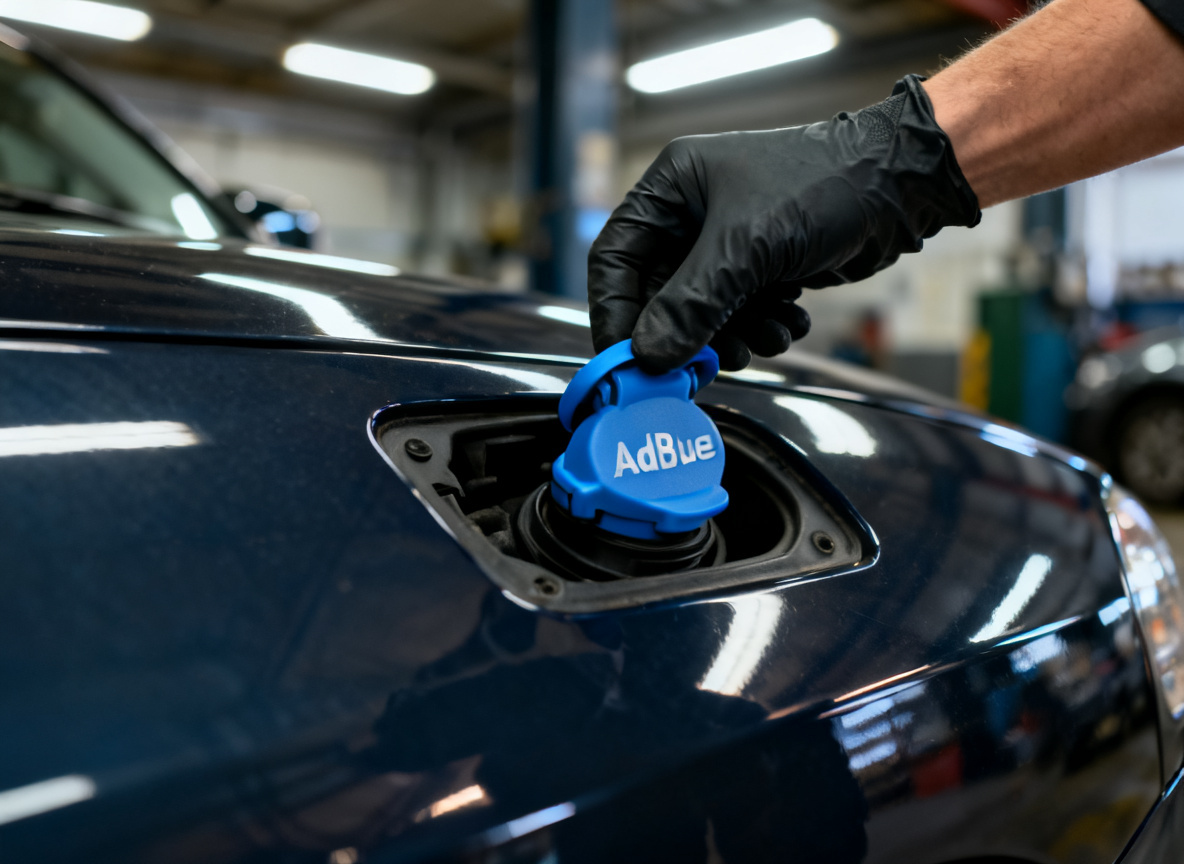
AdBlue Delete Cost: UK Guide to Pricing & What's Included
AdBlue delete is one of the most searched services in the diesel tuning world — but pricing varies considerably and the reasons why aren't always clear. This guide explains what affects the cost, what a proper job includes, and what to watch out for before you commit.
In This Guide
- What AdBlue delete actually involves
- What affects the cost of AdBlue delete
- Vehicle type and make: why pricing varies
- Mobile vs workshop: what difference does it make?
- What should be included in a proper AdBlue delete
- Why cheap AdBlue delete can cause bigger problems
- AdBlue delete vs AdBlue repair: which is right?
- FAQs
What AdBlue Delete Actually Involves
Before you can understand pricing, it helps to understand what AdBlue delete is — and what it isn't.
AdBlue (also called DEF or diesel exhaust fluid) is a urea-based solution injected into the exhaust of modern diesel vehicles to reduce NOx emissions. It's part of a system called Selective Catalytic Reduction (SCR), which the engine's ECU monitors continuously. If the system detects a fault — a failed sensor, a blocked injector, a pump failure, or a low tank — it triggers a countdown and, eventually, a power-reducing lockout.
AdBlue delete removes the ECU's dependence on this system entirely. Done properly, it means your vehicle no longer monitors or requires the AdBlue system to operate. Faults disappear, countdowns stop, and the vehicle runs without the ongoing cost and maintenance the AdBlue system demands.
This is achieved through ECU remapping — reprogramming the engine management system so that the SCR system is permanently deactivated at software level. It's not a physical disconnection; it's an ECU calibration job.
Important
AdBlue delete is only legal for off-road or export use in the UK. Vehicles modified in this way cannot legally be driven on UK public roads. Stoke Tuning provides this service for off-road machinery, plant vehicles, and vehicles being prepared for export.
What Affects the Cost of AdBlue Delete
The cost of an AdBlue delete in the UK is not a single figure. Several variables affect what you should expect to pay, and understanding them helps you assess any quote you receive.
Vehicle Make and Model
This is the biggest single driver of price. Different manufacturers use different ECU platforms, and some are significantly more complex to work with than others. A Mercedes with a Bosch ECU and an integrated NOx control module is a more involved job than a Ford Transit or a light commercial vehicle. The time required, and the specialist tools needed, both increase with complexity.
Brand-specific delete work on Mercedes, BMW, Audi, and Volkswagen Group vehicles tends to be priced higher than equivalent work on volume commercials — not as a premium, but because the calibration time is genuinely greater.
Whether a NOx Sensor Delete Is Also Required
On many vehicles, the AdBlue system and the NOx sensor monitoring system are closely linked. In some cases, deleting the AdBlue system alone is insufficient — the NOx sensor delete needs to be handled as part of the same calibration, or the vehicle will continue to generate fault codes from the sensor side.
A technician quoting for AdBlue delete should identify upfront whether NOx delete is also required for your specific vehicle. If it's needed and not included in the initial quote, the final cost will be higher than the headline figure.
Whether Existing Faults Need Clearing First
If your vehicle has active faults — failed AdBlue pumps, cracked tanks, seized injectors, or corroded wiring — those problems may need to be assessed before or after the delete work. The delete itself addresses the ECU dependency, but it won't repair physical damage to the AdBlue system.
Some technicians will carry out a full pre-delete diagnostic to establish the exact vehicle condition. This is the right approach, and it may add a small cost — but it prevents misunderstandings about what the delete will and won't fix.
Mobile or Workshop
Mobile AdBlue delete is available and is a genuine option for many vehicles. A mobile service removes the need to transport a vehicle that may be in limp mode or countdown — the technician comes to you. However, mobile calibration work has the same technical requirements as workshop-based work; it's the logistics that differ, not the quality of the job.
Expect a small premium for mobile attendance, reflecting travel time and the convenience factor. If your vehicle is not operational, mobile is often the most practical option regardless of cost.
What Should Be Included in a Proper AdBlue Delete
Not all AdBlue deletes are equal. The cost difference between providers sometimes reflects different levels of work — or, in some cases, genuinely different outcomes for the vehicle.
A properly executed AdBlue delete should include the following as a minimum:
- Full ECU read: The technician reads the current ECU calibration before making any changes. This establishes a baseline and protects the vehicle's original mapping.
- Vehicle-specific delete calibration: The solution should be written specifically for your vehicle's ECU platform, build date, and software version — not a generic override applied across multiple variants.
- Fault code clearing: All active and stored AdBlue-related fault codes should be cleared as part of the job.
- Post-work verification: The technician should confirm the vehicle starts cleanly, runs without fault, and shows no remaining AdBlue-related warning messages.
- NOx sensor handling (where required): If your vehicle needs NOx delete as part of the process, this should be confirmed and included at the outset.
If a quote doesn't mention any of these elements — or if it's unclear what the process involves — it's worth asking before agreeing to anything.
Why Cheap AdBlue Delete Can Cause Bigger Problems
The lower end of the market for AdBlue delete exists, and it's worth understanding what drives it. Very low prices often indicate one of the following:
Generic or Unverified Calibrations
Some AdBlue delete files are sold as one-size-fits-all solutions for a given vehicle platform. On paper, a file that works on a 2018 Transit may seem transferable to other 2018 Transit variants. In practice, mid-year software updates, regional market differences, and dealer calibration history mean that vehicles with the same VIN structure can carry different ECU versions. Applying a calibration built for one variant to another can cause drivability issues, new fault codes, or — in serious cases — damage to the ECU.
No Post-Work Verification
A quick delete that's not verified leaves you with uncertainty. If the vehicle subsequently shows fault codes or runs poorly, you won't know whether the issue is related to the delete or pre-existing. Verification takes time — and time is reflected in cost.
No Backup of Original Calibration
Before any ECU modification, the original calibration should be read and saved. If something goes wrong during the write process, or if the vehicle needs to be returned to standard at a later date, the original file is essential. Not all low-cost providers do this.
The cost of resolving problems caused by poor delete work typically exceeds the saving made on the initial job. This is one area where price shopping alone is not a reliable guide to value.
AdBlue Delete vs AdBlue Repair: Which Is Right?
Cost-conscious owners sometimes ask whether repair is a better option than delete. The answer depends on the vehicle, its age, and its intended use.
When Repair Makes Sense
If the fault is isolated — a single failed sensor, a blocked injector that can be cleared, or a wiring issue — repair can be cost-effective and appropriate. Modern AdBlue systems are reliable when well-maintained, and a targeted repair on a relatively new vehicle with a straightforward fault is a reasonable choice.
When Delete Makes More Sense
For older vehicles, for fleet operators managing multiple units, for high-mileage workhorses where the AdBlue system has already generated repeated faults, or for off-road plant and machinery, delete is often the more practical long-term solution. The initial cost is a one-time spend rather than a recurring maintenance item.
It's also worth noting that AdBlue system components — pumps, injectors, tanks, heaters — are not cheap to replace on complex vehicles. If a single repair quote is comparable to the cost of a delete, the economics often favour the permanent solution for the right use case.
Not sure which route is right?
Stoke Tuning can carry out a full diagnostic to establish exactly what's wrong with your AdBlue system before recommending a course of action. The right solution depends on your vehicle and how you use it.
What to Ask Before Booking AdBlue Delete
If you're comparing providers, these are the questions worth asking before committing to any AdBlue delete service:
- Is the calibration specific to my vehicle's ECU version and build date, or is it a generic file?
- Will you read and backup the original ECU file before making any changes?
- Is NOx sensor delete included, or does my vehicle need it separately?
- Will you verify the vehicle runs cleanly and fault-free after the work?
- Do you offer mobile service if my vehicle is in countdown or limp mode?
A provider who can answer these questions clearly is more likely to deliver a clean outcome. Vague answers — particularly around calibration specificity — are worth taking seriously before handing over the keys.
Get a Quote for AdBlue Delete
Stoke Tuning provides vehicle-specific AdBlue delete and NOx sensor delete for off-road machinery, plant, and export vehicles. We work from a workshop in Stoke-on-Trent and offer mobile attendance across Staffordshire and surrounding areas.
Contact us with your vehicle make, model, and year for an accurate quote — no obligation.
Frequently Asked Questions
Does AdBlue delete include NOx sensor delete?
Not always — it depends on your vehicle. Some vehicles require both AdBlue delete and NOx sensor delete to clear all related fault codes and warnings. Stoke Tuning will identify whether NOx delete is required for your specific vehicle as part of the assessment process.
Can AdBlue delete be reversed?
Yes, provided the original ECU calibration was read and saved before the delete was applied. Stoke Tuning backs up the original file on all vehicles before any modification is made. If you ever need the vehicle returned to standard — for resale, inspection, or export to a different market — the reversal is straightforward.
Will AdBlue delete affect my vehicle's performance?
In most cases, no. AdBlue delete addresses the SCR system and its monitoring. It does not alter fuelling, boost, or power delivery. If your vehicle has been in a countdown-related power derate, removing the countdown restriction will restore normal performance — but this reflects the system returning to its base calibration, not a performance increase.
How long does AdBlue delete take?
For most vehicles, the ECU work itself takes between one and three hours, depending on the vehicle platform and what's involved. More complex vehicles, or those with additional fault codes requiring investigation, may take longer. Stoke Tuning will give you a realistic time estimate when you make contact.
Is AdBlue delete legal in the UK?
AdBlue delete is only legal for off-road or export use. Vehicles modified in this way cannot legally be driven on UK public roads and will not pass an MOT. Stoke Tuning provides this service only for vehicles being used off-road or prepared for export, in line with UK regulations.