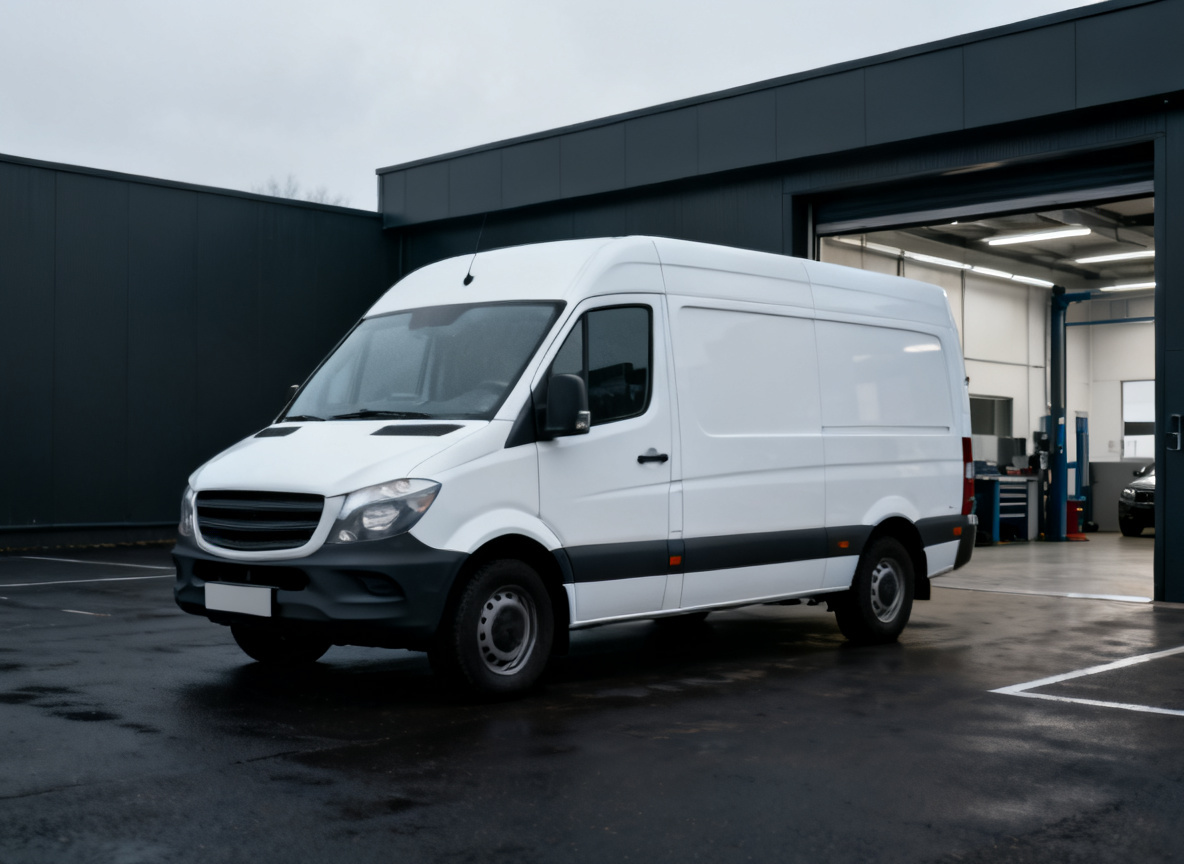
Van Remap Guide: What Commercial Vehicle & Fleet Owners Need to Know
Vans and light commercial vehicles are often ignored when people talk about ECU remapping — the assumption being that remaps are for performance cars. In reality, a van remap is one of the most practical upgrades available to working vehicle owners, with meaningful improvements to pulling power, fuel economy, and driveability under load. This guide explains how it works and what to expect.
In This Guide
- Why van remaps are different from car remaps
- What a van remap actually changes
- Realistic power and economy gains
- Which vans can be remapped
- The remapping process: what to expect
- Fleet considerations: multiple vehicles
- Insurance and compliance for commercial vehicles
- FAQs
Why Van Remaps Are Different From Car Remaps
Most discussions about ECU remapping focus on performance cars — adding power, improving throttle response, getting more from a sporty engine. Van remaps follow the same technical process but serve a different purpose: improving the working performance of a vehicle that’s built to carry loads, tow, and cover high mileage.
Commercial diesel engines are frequently restricted at the factory to meet multiple market requirements — the same engine family may be used in vans sold across markets with different payload ratings, different fuel quality expectations, and different emissions standards. The ECU map is often calibrated conservatively to accommodate the lowest common denominator, which means many vans have usable headroom that a remap can unlock safely.
The practical effect of a van remap is usually felt most clearly when the vehicle is loaded. A transit van at or near maximum payload that previously felt sluggish pulling away or struggled on long inclines can feel meaningfully more capable after a remap — not because it’s been pushed beyond its design limits, but because the ECU is now using more of what the engine can already do.
Key difference from car remaps: Van operators often prioritise fuel economy over outright performance. A van remap can be focused on pulling the engine into its torque band more efficiently rather than raising peak power — this is what makes the biggest difference in real-world economy on loaded commercial use.
What a Van ECU Remap Actually Changes
A van remap modifies the calibration tables written into the engine ECU. These tables control how the engine behaves across the full range of operating conditions — from idle to full load, cold start to operating temperature, light throttle to wide-open throttle.
The specific changes made during a remap depend on the engine and the goals of the owner, but typically include some or all of the following:
- Boost pressure targets: The ECU map defines what boost pressure the turbocharger should deliver at different points in the rev range. Increasing boost targets — within what the turbo and engine hardware can support safely — is one of the primary ways a remap increases power and torque.
- Fuel injection quantity: More fuel, matched to more air from increased boost, produces more power. The injection quantity map is adjusted to take advantage of the available airflow without over-fuelling.
- Injection timing: Diesel combustion efficiency depends on precisely when fuel is injected relative to piston position. A remap can advance or retard timing across different operating conditions to improve combustion quality and fuel efficiency.
- Torque limiters: Many commercial vehicles have torque limits written into the ECU map that are separate from the physical limits of the engine and drivetrain. These limits are often set to protect the gearbox across the widest range of operators and loads — a conservative setting that can be safely adjusted.
- Throttle response mapping: The relationship between accelerator pedal position and throttle response can be adjusted for more linear, predictable power delivery — particularly useful for vans used in city environments where smooth throttle modulation matters.
Realistic Power and Economy Gains for Vans
Specific gains depend on the engine, its current condition, and the goals of the remap. That said, here’s what commercial vehicle owners typically experience:
| Vehicle Type | Typical Power Gain | Typical Torque Gain | Economy Impact |
|---|---|---|---|
| Ford Transit (2.0 EcoBlue) | 15–30% | 20–35% | 5–12% improvement |
| Mercedes Sprinter (2.1/2.2 CDI) | 15–25% | 20–30% | 5–10% improvement |
| VW Transporter (2.0 TDI) | 20–35% | 25–40% | 8–15% improvement |
| Vauxhall Vivaro (1.6/2.0 CDTI) | 15–25% | 20–30% | 5–10% improvement |
| Renault Trafic (1.6/2.0 dCi) | 15–25% | 20–30% | 5–10% improvement |
Economy gains are most pronounced for drivers who cover long distances at motorway speeds with consistent loads. Urban stop-start driving shows smaller economy improvements — the bigger gain in that context is usually the reduction in gear changes and the improved ability to maintain momentum in traffic without downshifting.
Note: Results vary by vehicle condition, driving style, and load. Stoke Tuning does not guarantee specific figures — these are typical ranges based on comparable vehicles. A vehicle with existing faults will not respond to a remap the same way as a well-maintained one.
Which Vans Can Be Remapped?
Most modern diesel vans with a turbocharged engine and an electronically controlled ECU can be remapped. The landscape of UK commercial vehicles includes a wide range of engine families that have been mapped by tuning companies for many years.
Commonly remapped commercial vehicles include:
- Ford Transit & Transit Custom — 2.0 EcoBlue, 2.2 TDCi across multiple power variants
- Mercedes-Benz Sprinter — 2.1 CDI and 2.2 CDI across multiple generations
- Volkswagen Transporter & Crafter — 2.0 TDI with significant tuning headroom across the range
- Vauxhall Vivaro & Movano — 1.6 CDTI, 2.0 CDTi and related platforms
- Renault Trafic & Master — 1.6 dCi, 2.0 dCi across the range
- Fiat Ducato, Peugeot Boxer, Citroën Relay — shared platform, multiple engine options
- Iveco Daily — various engine options, particularly popular with heavier commercial operators
If your van isn’t listed above, contact Stoke Tuning to confirm availability — the list of compatible vehicles continues to grow as new ECU solutions are developed.
The Van Remapping Process: What to Expect
A van remap follows the same fundamental process as a car remap, with the vehicle brought to the workshop for a session that typically takes between one and three hours depending on the vehicle and the complexity of the ECU access method required.
Pre-Remap Health Check
A healthy vehicle responds to a remap predictably. One with existing faults — a partially blocked DPF, a boost leak, worn injectors, or a MAF sensor issue — won’t deliver the expected result and may behave erratically after the remap. A basic pre-remap check confirms the vehicle is in a suitable condition before the session begins.
ECU Access
The calibration data is read from the vehicle’s ECU via the OBD port in most cases. On some older or more complex commercial vehicle ECUs, direct access to the ECU module may be required — a process that takes longer but delivers a cleaner read of the base map. Stoke Tuning uses professional-grade equipment, including genuine Autotuner and BDM hardware where needed.
Map Development
The base map is modified to the agreed specification — power-focused, economy-focused, or a balanced approach depending on the operator’s priorities. The new calibration is reviewed before being written back to the ECU.
Post-Remap Verification
After the remap is written, the vehicle is started and checked for fault codes. A short road test or data review confirms the engine is responding as expected. You’ll typically notice the difference on the drive home — particularly when pulling away under load or accelerating at motorway speeds.
Fleet Considerations: Multiple Vehicles
Operators running a fleet of identical or similar vans can benefit significantly from remapping multiple vehicles. Once a calibration has been developed for a specific engine variant and configuration, subsequent remaps on the same platform are more straightforward.
For fleet operators, the practical argument for remapping is usually economy-led. Even a modest improvement in fuel consumption across ten or twenty vans covering high annual mileage adds up to meaningful cost savings over a year. Reduced gear-changing and lower engine stress from improved torque in the working rev range also has a positive effect on driver fatigue on longer runs.
If you’re considering remapping a fleet, contact Stoke Tuning to discuss the vehicles involved, current mileage, and usage patterns. The approach for a five-year-old high-mileage Transit used for local deliveries differs from a newer Sprinter used for motorway-heavy national runs.
Insurance and Compliance for Commercial Vehicles
The insurance and compliance picture for commercial vehicle remaps is worth understanding before booking. For sole traders and small operators using their vans for business, the same principle as car remaps applies: the modification should be declared to your insurer. Not all insurers treat commercial vehicle remaps negatively — some fleet-focused policies are straightforward about modifications — but non-disclosure is a risk that can invalidate a claim.
For larger fleet operators, particularly those subject to operator licence conditions or vehicles over 3.5 tonnes, the compliance picture is more nuanced. Vehicle operating limits, emissions compliance, and maintenance schedules may all be relevant. It’s worth taking advice specific to your fleet and usage category before proceeding.
At the workshop level, a remap using custom calibration data — rather than generic off-the-shelf files — can be written to document the changes made, which may be useful for insurance purposes.
Stoke Tuning recommends: Always inform your insurer of any ECU modifications to your commercial vehicle. We can provide information about what changes were made to assist with any insurer queries.
Ready to Find Out What Your Van Can Do?
Stoke Tuning remaps commercial vehicles from the Stoke-on-Trent workshop, covering Transit, Sprinter, Transporter, and more. Get in touch to confirm compatibility and discuss what you want from the remap.
FAQs: Van & Commercial Vehicle Remaps
Will a van remap void my warranty?
If your van is still within manufacturer warranty, a remap may affect the warranty position on powertrain-related claims. Most warranty claims are checked at manufacturer level by reading ECU data. If the vehicle is out of warranty — which is the case for most working vans — this isn’t relevant. Ask your Stoke Tuning technician if you’re unsure.
How long does a van remap take?
Most van remaps are completed within one to three hours at the workshop. Some older or more complex ECUs require additional time for direct ECU access. You’ll usually be able to drive the vehicle away on the same day.
Can my van be remapped if it has high mileage?
High mileage doesn’t automatically rule out a remap — but the condition of the engine matters more than the number on the odometer. A high-mileage van that’s been well serviced with no faults can be remapped safely. One with worn injectors, a tired turbo, or a partially blocked DPF should have those issues addressed first for the best result.
Will remapping improve my van’s towing performance?
Yes, in most cases. The torque improvement from a van remap is felt most clearly at low to mid revs — exactly the range used when pulling a loaded trailer. Improved torque in that range means less lugging, better hill performance, and less need to drop gears under load.
Can a van remap be reversed?
A remap done by a professional using the original base map data can be reversed — the original calibration can be written back to the ECU. Stoke Tuning retains original map data during the remapping process. If you need the vehicle returned to stock for any reason, this is possible.
Related: Ford Focus Stage 1 Remap: Real Gains by Engine, Cost & What to Expect